 Roga Digital
orc-pack
Works your GitHub issues end to end in Claude Code. For each one it plans the change, pins the behavior in tests, builds it, screenshots any UI change, updates the docs, and commits. Then a bench of specialist reviewers checks the result.
Version 1: why one agent struggles with big jobs
An AI coding assistant can only hold so much in its head at once. On a small task that is plenty. On a sprawling one it runs short of room and starts cutting corners. So the first orc-pack was built as a team lead: an orchestrator that kept its own context small and handed each piece of work to a specialist with a fresh, focused window. This animation shows the difference a team lead makes. Switch between the plain and technical explanations, or pick any scene.
Who was on the team
Orc sized each task first, so a one-line copy fix got one reviewer while a new upload handler woke the security reviewer. Review and fix looped until only nitpicks were left. You could hand it an issue, walk away, and come back to one clear line: FINISHED when the work landed, green and pushed, or NOT FINISHED with exactly what a human needed to do to unblock it.
- Scout
- Surveyed the issue board and picked the next piece of work.
- Implementer
- Wrote the code and its tests for one scoped task.
- Reviewers
- Security, architecture, quality, UI, comments, and test coverage. Only the ones a diff needed were called in.
- Verifier
- Checked every finding against the real code and dropped the false positives.
- Runners
- Lint, type checks, tests, and diff stats, reported raw so nothing was glossed over.
Version 2: we measured it, and rebuilt it around one session
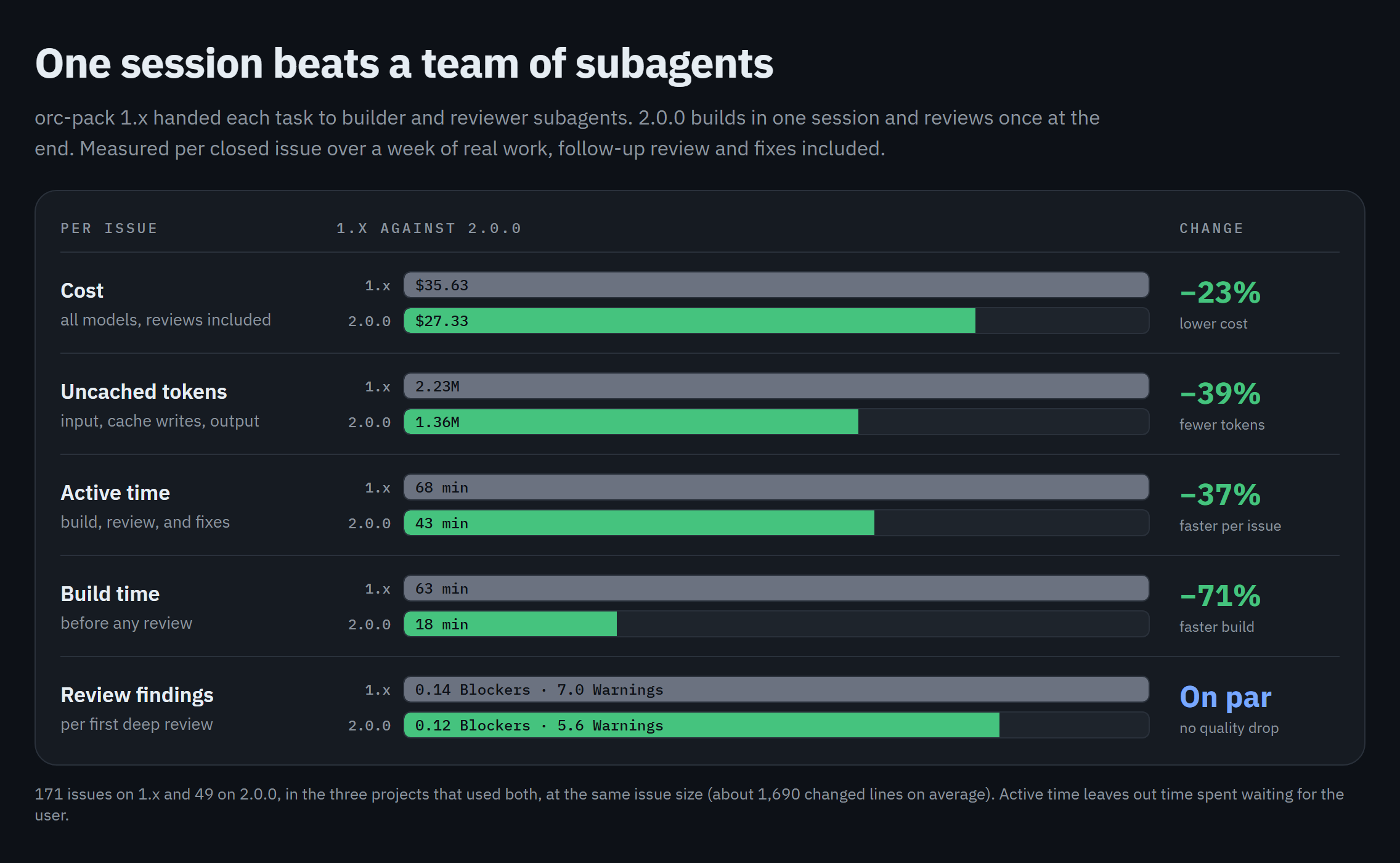
The team worked, but it had a cost. Every builder and reviewer subagent started cold, so each one re-read code and context the main session already held, and every task paid for its own review panel and fix rounds. For a week we ran a leaner workflow side by side with the old one: the session that already holds the context does the building, one issue at a time, and the specialist review runs once at the end, in a fresh session.
The specialists didn’t go away. They moved to where a fresh pair of eyes pays off: review. Building stays with the session that knows the code. Measured per closed issue across the three projects that used both versions, with every follow-up review and fix included, version 2 came out cheaper and faster with the same review quality.
- lower cost per issue
- 23%
- $35.63 down to $27.33
- fewer uncached tokens
- 39%
- 2.23M down to 1.36M
- less active time
- 37%
- 68 minutes down to 43
- faster build
- 71%
- 63 minutes down to 18
The trial’s one gap, commits that failed a repo’s own checks, is closed in 2.0.0: orc now runs the format check, type check, and covering tests before every commit.
Ways to run it
/orc 123Do this issue
Point it at an issue, or a list of them. It reads the issue and the code, plans the change, and builds it.
/orc 350-360Work a batch
Give it a range and it plans every issue in one message, waits for one go-ahead, then builds them in order, one commit each.
/orc next 10Pick from the board
It ranks your open issues by urgency, priority, and what unblocks other work, then takes the top ten.
/orc fix the Safari date pickerHere is what I want
Describe the work in a sentence. Orc turns it into a scoped brief with testable acceptance criteria and builds it.
When the batch is done, orc asks before it pushes, then closes each issue with a comment saying where it landed. /do is the same skill under another name.
Want to watch a run without reading the transcript? Install paceline, and orc shows its progress as a bar in your Claude Code status line, one cell per issue: orc ▰▰▰▰▱▱ #356 upload limit build 62%.
Who reviews the work
Run /orc-review in a fresh session over what orc committed. It sizes the review to the change, so a copy fix gets one reviewer while a new upload handler wakes the security reviewer, and it ends with a clear verdict. Then /orc warnings and nits fixes what it found.
- Reviewers
- Security, architecture, quality, UI, comments, and test coverage. Only the ones a change needs are called in.
- Verifier
- Checks every finding against the real code and drops the false positives.
- Runners
- Lint, type checks, and tests, reported raw so nothing is glossed over.
- Your profile
- One setup run records your stack, risk areas, and known non-issues, so each review knows your project.
Install it
As a plugin
Quickest. Available in every project, and updates arrive with each release.
/plugin marketplace add rogadev/orc-pack
/plugin install orc-pack@orc-pack
Into one repo
Committable and tunable for a team. Open Claude Code in your repo and ask it to install the pack. It follows the kit’s own install guide.
Install https://github.com/rogadev/orc-pack into this repo.Want tooling like this for your team?